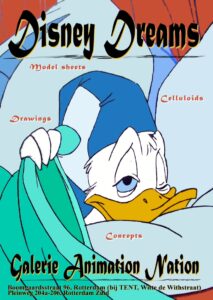
Exhibitions are at the heart of AnimationNation. They allow us to bring original animation art out of storage and place it in new contexts, combining familiar characters with stories about artists, studios, techniques, popular culture and visual history.
We develop changing exhibitions in our own gallery in Schiedam and collaborate with museums and cultural institutions on larger projects. Past exhibitions have ranged from classic American animation to anime, comic art and thematic shows such as From Mouse to Mickey at the Natural History Museum Rotterdam.
Our aim is to continue developing exhibitions for audiences in the Netherlands and internationally, showing that animation art is not only part of film history, but an art form in its own right.
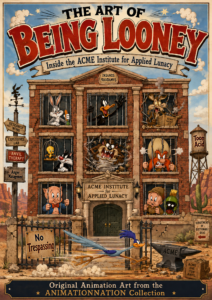
THE ART OF BEING LOONEY
1. Daffy Duck at the Piano
Bugs and Daffy’s Carnival of the Animals, 1976
Manny Perez (1914–1981)
Pencil on animation paper
Original rough animation drawing of Daffy Duck energetically playing the piano. Manny Perez was one of the master animators on Chuck Jones’s television adaptation of Saint-Saëns’s Carnival of the Animals.
2. Road Runner with Question Mark
Chariots of Fur, 1994
Warner Bros. Animation / Chuck Jones Film Productions
Gouache on acetate
Original production cel from Chariots of Fur, directed by Chuck Jones (1912–2002). The theatrical short marked Jones’s final film as director featuring Wile E. Coyote and the Road Runner.
3. Road Runner
Chariots of Fur, 1994 / background from No Man’s Valley, 1981
Warner Bros. / Bill Melendez Productions
Gouache on acetate over hand-painted background
Original Road Runner production cel from Chariots of Fur displayed over an original non-matching hand-painted production background from No Man’s Valley (1981), produced and directed by Bill Melendez (1916–2008).
4. Bugs Bunny in Shock
Wabbit: A Looney Tunes Production, 2015
Warner Bros. Animation
Coloured pencil on animation paper
Production drawing of Bugs Bunny, marked B72, made during the digital production process for Wabbit: A Looney Tunes Production, later retitled New Looney Tunes. The drawing captures Bugs in an exaggerated moment of surprise and movement.
5. Yosemite Sam EXPLODED in a Car
Looney Tunes: Back in Action, 2003
Warner Bros. Feature Animation
Pencil on paper
Panoramic production drawing of Yosemite Sam from Looney Tunes: Back in Action. Directed by Joe Dante, the feature combined live action with traditionally animated Looney Tunes characters.
6. Daffy Duck, “Height Jokes”
Space Jam: A New Legacy, 2021
Len Simon (b. 1970)
Pencil on animation paper
Signed production drawing by animator Len Simon, created in connection with a sequence involving the transition of the Looney Tunes characters between two-dimensional and three-dimensional animation.
7. Daffy Duck and Claw Chaney
Daffy Duck and Porky Pig Meet the Groovie Goolies, 1972
Filmation / Warner Bros. Television
Pencil on animation paper
Original production drawing of Daffy Duck with the monster character Claw Chaney. Daffy’s name for the character is a comic reference to silent-film actor and celebrated screen monster Lon Chaney (1883–1930). The individual animator responsible for this drawing has not been identified.
8. Road Runner – Publication Artwork
c. 1980s–1990s
Warner Bros.
Ink on Strathmore board
Original finished line artwork of the Road Runner, probably created for reproduction in a Looney Tunes colouring or activity book. It forms a pair with the Wile E. Coyote artwork also shown in the exhibition and appears to originate from the same publication project.
9. Wile E. Coyote, Tweety, Sylvester and Porky Pig
Daffy Duck and Porky Pig Meet the Groovie Goolies, 1972
Filmation / Warner Bros. Television
Gouache on acetate
Original hand-painted production cel showing Wile E. Coyote, Tweety, Sylvester and Porky Pig as silhouettes. The television special was an unusual crossover in which Filmation animated established Warner Bros. characters alongside its own Groovie Goolies cast.
10. Wile E. Coyote
1995
Chuck Jones (1912–2002)
Pencil on paper
Original sketch of Wile E. Coyote drawn by Chuck Jones during an interview in 1995. Jones created the character with writer Michael Maltese and directed the classic Road Runner and Coyote cartoons from their beginnings in 1949.
11. Wile E. Coyote – Publication Artwork
c. 1980s–1990s
Warner Bros.
Ink on Strathmore board
Original finished line artwork of Wile E. Coyote, apparently created for the same colouring or activity-book project as the accompanying Road Runner drawing. The clean inked line was intended for reproduction rather than animation production.
12. Bugs Bunny, LeBron James and the Tasmanian Devil
Space Jam: A New Legacy, 2021
Drawings by Len Simon (b. 1970)
Pencil on animation paper
Group of four production drawings: Bugs Bunny, LeBron James and two sequential studies of the Tasmanian Devil falling forward. The drawings document character poses and movement during production of a feature combining traditional two-dimensional animation with digital and three-dimensional imagery.
13. Bugs Bunny – Head Studies
Bugs and Daffy’s Carnival of the Animals, 1976
Manny Perez (1914–1981)
Pencil and coloured pencil on animation paper
Two original rough studies of Bugs Bunny by master animator Manny Perez. The drawings reveal the exploratory stage of the animation process, establishing expression and character before the image was refined for filming.
14. Bugs Bunny, Daffy Duck and Elmer Fudd
c. 1980s–1990s
Kelley Jarvis (b. 1968) for Warner Bros.
Pen on paper
Original character illustration by Kelley Jarvis showing Bugs Bunny seated on a mound of carrots with Daffy Duck and Elmer Fudd. Jarvis worked as an illustrator, animator and licensed-character artist for major American entertainment studios.
15. Bugs Bunny, “Ain’t it Doc”
Space Jam: A New Legacy, 2021
Len Simon (b. 1970)
Pencil on animation paper
Signed production drawing by animator Len Simon, made in connection with a sequence in which Bugs Bunny is translated from his traditional two-dimensional form into a three-dimensional digital character.
16. Yosemite Sam
A Connecticut Rabbit in King Arthur’s Court, 1978
Manny Perez (1914–1981)
Chuck Jones Productions / Warner Bros. Television
Pencil on animation paper with timing notations
Original rough animation drawing of Yosemite Sam by Manny Perez, retaining production timing notes. Directed by Chuck Jones, the television special reimagined Mark Twain’s A Connecticut Yankee in King Arthur’s Court with Bugs Bunny and other familiar Warner Bros. characters.
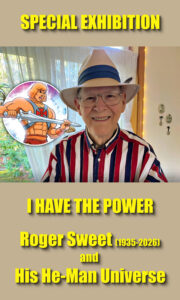
I HAVE THE POWER
Roger Sweet (1935-2026) and His He-Man Universe
Long before He-Man raised his sword and declared “I Have the Power!”, there was a man at a whiteboard in a Mattel brainstorming room. His name was Roger Sweet.
In the early 1980s, the toy industry was dominated by licenced properties like Star Wars and The Dukes of Hazzard. Sweet, a Mattel product designer, argued that the future lay in an original, internally created action figure. His now-legendary “Three Concepts” presentation featured a space pilot, a monster, and a blonde barbarian. Mattel chose the barbarian. He-Man was born.
Sweet’s genius was not just in the sculpt of a muscular figure, but in the ecosystem. He understood that to sell toys, you needed a world. That world would eventually be visualised in animation by the legendary studio Filmation.
This exhibition does not merely celebrate He-Man. It maps the constellation of animation that surrounds him: the prototypes, the competitors, the parallel worlds, and the secret origins. From the mythological roots of Space Sentinels to the gritty alleys of the Ninja Turtles, this exhibition reveals how a single drawing of a barbarian changed the landscape of children’s entertainment and animation art forever.
EXHIBITION CATALOGUE
1 Evil-Lyn and Beast Man He-Man and the Masters of the Universe (1983-1985) Filmation for Mattel Pencil on paper Two of Skeletor’s most loyal henchmen. Evil-Lyn is the cunning sorceress, Beast Man the brute force.
2 Orko He-Man and the Masters of the Universe (1983-1985) Filmation for Mattel Gouache on acetate Orko, the floating troll from Trolla, is He-Man’s comic relief sidekick.
3 He-Man He-Man and the Masters of the Universe (1983-1985) Filmation for Mattel Gouache on acetate The hero himself
4 Prince Adam He-Man and the Masters of the Universe (1983-1985) Filmation for Mattel Pencil on paper Prince Adam, He-Man’s secret identity from episode 24, scene 87 He-Man
5 He-Man He-Man and the Masters of the Universe (1983-1985) Filmation for Mattel Pencil on paper The hero himself
6 Shadow Weaver She-Ra: Princess of Power (1985) Filmation for Mattel Pencil on paper The most psychologically complex villain in the extended He-Man universe.
7 (on table) She-Ra Panoramic Background She-Ra: Princess of Power (1985) Filmation for Mattel Gouache on acetate (30.5″ x 10.5″) A rare wide-format background from He-Man’s twin sister series. This sweeping landscape of Etheria shows that the artists at Filmation were thinking cinematically, not just commercially.
8 Flash Gordon Flash Gordon (1979-1982) Filmation for King Features Gouache on acetate and gouache on board Shirtless, armed with a raygun, Flash bridges the gap between sword-and-sorcery and science fiction, the exact aesthetic Sweet wanted for He-Man.
9 Mercury Space Sentinels (1977) Filmation Gouache on acetate Mercury was one of the first animated Asian superheroes, portrayed in a non-stereotypical way.
10 Baron Dark Skeleton Warriors (1993) Landmark entertainment Gouache on acetate on a non-matching hand-painted background Baron Dark was clearly inspired by He-Man’s Skeletor, and was also created to sell toys. In this shot he lift his bony finger to make a point.
11 Hercules Space Sentinels (1977) Filmation Gouache on acetate Hercules from 1977 is a blonde, muscular god. Proof that Filmation had perfected the “blonde hero” template years before He-Man.
12 Baron Dark Close-up Skeleton Warriors (1993) Landmark entertainment Gouache on acetate on a non-matching hand-painted background Baron Dark was clearly inspired by He-Man’s Skeletor, and was also created to sell toys. Never in good mood.
13 Action figure: Teenage Mutant Ninja Turtles (1987) Murakami-Wolf-Swenson Studios Painted plastic The Turtles were developed by the same man, T. Mark Taylor (1941-2021), who created the He-Man animated series. The business model—sell the toys through the cartoon—is identical.
14 (on easle) Egyptian Museum Room Shazam! (1981) Filmation Gouaches on acetate against hand painted backgrounds on cardboard (25 x 90 cm) The narrative engine behind He-Man. Billy Batson transforms into Captain Marvel. Roger Sweet borrowed that exact formula—the boy who becomes the hero—for Prince Adam and He-Man.
15 (on easle) Mummies on Attack Filmation’s Ghostbusters (1986) Filmation Gouaches on acetate against hand painted backgrounds on cardboard (25 x 70 cm) From episode ‘No Pharaoh At All’, design probably painted by Enzo Baldi. Produced under Lorenzo Martinez department who also did He-Man and the Masters of the Universe
16 Flash Gordon Flash Gordon (1979-1982) Filmation for King Features Gouache on acetate The visual blueprint for He-Man. Flash Gordon’s blonde hair, strong jaw, and heroic profile are a direct rehearsal for the character Roger Sweet would later create. From episode 12, scene 47.
17 Demon Seeds Blackstar (1981) Filmation Gouache on acetate Blackstar is considered the direct predecessor to He-Man. These purple “demon seeds,” created by a sorceress, scene from episode 12: “The Crown of the Sorceress”
18 Conan Conan the Adventurer (1992-1994) Jetlag Productions / Sunbow Gouache on acetate Roger Sweet cited Conan as his primary inspiration. But He-Man inspired the Conan The Adventurer series from the 1990s. Scene from season 2, episode 23: “The Queen of Stygia”
19 Zula Conan the Adventurer (1992-1994) Jetlag Productions / Sunbow Gouache on acetate Zula was a prince of the Wasai tribe and Conan’s first ally and “blood brother”
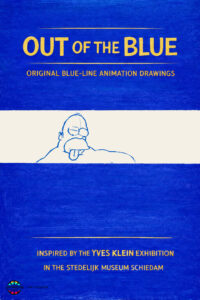
OUT OF THE BLUE: original blue-line animation drawings
This exhibition takes its inspiration from the Stedelijk Museum Schiedam exhibition Yves Klein and His Artist Family: Frits, Marie and Rotraut.
For Yves Klein, blue was far more than a colour choice. His International Klein Blue became his artistic signature, and his intense blue monochromes were meant to evoke infinity and reflect the immateriality of space. In animation art, blue is also a key colour. Artists used blue pencil to work out poses, expressions and layouts on paper.
A blue-line sketch is a still image, yet it holds movement in suspension. It is time caught on paper, a frozen moment, built from lines that were made to disappear. If Klein’s blue was there to be seen, animation blue was there not to be seen: temporary and destined to vanish. Yet it was out of this blue that the film or television series came into being. In that sense, the true art of animation often remained hidden.
This exhibition gives these drawings the attention they have rarely received.
These drawings were never meant for display, yet they represent the art of drawing in its most confident form. Here we catch a glimpse of the gifted animators behind the completed film or series. These artists possess what Chuck Jones called “the line”: the rare ability to put on paper, in one assured stroke, what they see in their minds. The works in this exhibition show that blue-line drawings were not a minor step in the process. They were the basis on which the rest depended. With a few lines, an animator could establish a gesture or an expression. Before paint, before colour, before the finished screen image, there was the blue line. Out of the Blue gives this temporary art the attention it deserves.
ARTWORKS
-
- Ultimate Spider-Man, “Damage”. Scene drawing with Spider-Man and Nick Fury.
Blue and coloured pencil on printed animation paper, with production notations. Marvel Animation / Film Roman Productions / Dong Woo Animation Co. From Ultimate Spider-Man, Season 1, Episode 18, “Damage”; directed by Jeff Allen; 2012.
-
- The Simpsons, “Treehouse of Horror XVII”. Blue-line drawing of Homer in “Married to the Blob”.
Blue pencil on animation paper. Gracie Films / 20th Century Fox Television. From The Simpsons, Season 18, Episode 4; directed by David Silverman and Matthew Faughnan; 2006.
-
- Oggy and the Cockroaches. Storyboard drawing of Oggy.
Blue pencil and black line on animation paper, with framing lines and scene notations. Gaumont Multimedia / Xilam Animation; created by Jean-Yves Raimbaud, series directed by Olivier Jean-Marie Drawing attributed to François Reczulski; c. 2000.
-
- Star Wars: Droids, “Escape Into Terror”. Scene drawing of C-3PO floating upward.
Blue and red pencil on animation paper, inscribed with production notes, signed by Brian Lemay. Lucasfilm / Nelvana. From Star Wars: Droids, Episode 2, “Escape Into Terror”; directed by Ken Stephenson; original drawing 1985, signed 2020.
-
- Bonkers. Close-up drawing of Bonkers D. Bobcat.
Blue pencil on animation paper, signed by David Block. Walt Disney Television Animation. David Block directed the 1992 short Petal to the Metal; 1992.
-
- Beetlejuice, “Ship of Ghouls”. Background layout drawing for the Nose Bowl Stadium.
Blue pencil on paper, with pasted paper elements and production notations. Nelvana / Geffen Pictures. Art by Chris LaBonte, from Beetlejuice Season 4, Episode 26, “Ship of Ghouls,” directed by Alan Bunce, John Halfpenny, Larry Jacobs, Rick Marshall and John Van Bruggen, 1991.
-
- My Little Pony. Drawing of a hairdressing scene.
Graphite and coloured pencil on animation paper, with framing lines and correction marks. Sunbow Productions / Marvel Productions / Hasbro; animated by Toei Animation and AKOM; from the My Little Pony television series; 1986.
-
- Ultimate Avengers II. Scene drawing of Black Panther.
Blue, red and yellow pencil on animation paper. Marvel Studios / Lionsgate / MLG Productions; from Ultimate Avengers II; directed by Will Meugniot and Dick Sebast, with Bob Richardson as supervising director; 2006.
-
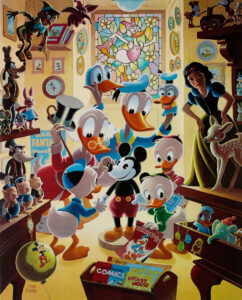
- In Uncle Walt’s Collectory. Preliminary study with Donald Duck and Scrooge McDuck.
Blue pencil on paper by Disney legend Carl Barks. Walt Disney Productions / Carl Barks; preliminary study of In Uncle Walt’s Collectory; 1984.
-
- Dink, the Little Dinosaur. Concept drawing of Dink in a tree.
Blue and graphite pencil on animation paper. Ruby-Spears Enterprises; art by Dennis Greco; 1989.
-
- Peter Gullerud. Flintstones parody on evolution and creationism.
Blue and blue-violet pencil on paper, signed and dated 2001. Independent drawing by Peter Gullerud, an animator and visual development artist who worked at Hanna-Barbera and Walt Disney Studios; 2001.
-
- Inspector Gadget Saves Christmas. Scene drawing of Inspector Gadget
Blue, graphite and coloured pencil on animation paper, with scene notations. DIC Animation City / NBC. From the award-winning film Inspector Gadget Saves Christmas; directed by Chuck Patton; 1992.
-
- Don Martin. Layout drawing for a bilingual public-information commercial.
Blue and red pencil on animation layout paper, with production notes. Disada Productions / Government of Quebec; after characters by Don Martin, longtime artist for MAD magazine; c. 1974.
-
- 101 Dalmatians: The Series. Layout drawing of house and yard.
Blue pencil on animation paper. Walt Disney Television Animation / Jumbo Pictures. From 101 Dalmatians: The Series; art by Dan Mills, storyboard artist on the series; 1997–98.
-
- I.M. Weasel. Storyboard drawing with I.M. Weasel and Dr. West.
Blue and graphite pencil on paper, with handwritten dialogue. Hanna-Barbera / Cartoon Network. From I.M. Weasel, created and principally directed by David Feiss; art by Richard Pursel; 1997–99.
-
- Pete’s Dragon. Blue-line drawing of Elliott.
Blue pencil on animation paper. Walt Disney Productions. From Pete’s Dragon; directed by Don Chaffey; 1977.
-
- Adventures of Sonic the Hedgehog. Production cel of Sonic.
Gouache on acetate cel. DIC Animation City / Sega of America / Bohbot Entertainment. From Adventures of Sonic the Hedgehog; 1993.
-
- The Smurfs. Smurfette production cel on copied background.
Hand-painted cel on copied background. Hanna-Barbera Productions. From The Smurfs, based on the characters created by Peyo; c. 1981–89.
15 MASTERPIECES: ANIMATION ROYALTY
Hand-drawn masterpieces from a century of animation in Gallery AnimationNation, Schiedam
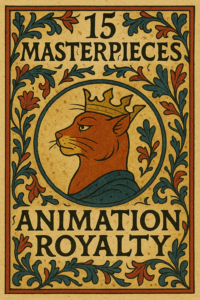
AnimationNation proudly presents 15 Masterpieces: Animation Royalty. Opening 13 September 2025, the show invites viewers to discover some of the most enduring characters and stories in visual culture. The exhibition features highlights from the renowned AnimationNation collection, including production cels, storyboards, model sheets, and sketches from the artists of studios such as Disney, Hanna-Barbera, Fleischer, and Spümcø. From an early twentieth-century American storyboard to an avant-garde Dutch short, and from iconic television series to a rare Ukrainian film, each work stands as a testament to the artistry and imagination that shaped animation’s global legacy. For Dutch audiences, 15 Masterpieces: Animation Royalty offers a rare opportunity to encounter the original artwork behind animated legends. The exhibition celebrates the often-overlooked craftsmanship of one of the defining art forms of the twentieth century.
“Original animation cels, rare storyboards, and model sheets: 15 Masterpieces: Animation Royalty invites audiences to see the art behind some of the most iconic animated cartoons.”
SpongeBob SquarePants Nickelodeon’s flagship series became a global cultural phenomenon and the longest-running American animated children’s show. Production cel from Season 1 featuring SpongeBob SquarePants and Patrick Star. United Plankton Pictures, Inc. Gouache on acetate over printed background. 1999.
The Ren & Stimpy Show: “Space Dogged” This cult series revolutionised TV cartoons in the 1990s with its surreal humour and boundary-pushing animation style. Production drawings from the Russian space spoof sequence, scene 7, Season 5. Spümcø / Nickelodeon Pencil on animation paper. 1996.
Striped Baby Elephant (Про полосатого слонёнка) Kievnauchfilm was one of the most influential Soviet studios during the Cold War, shaping the look of Eastern European animation. Key master set-up from the children’s film about friendship, directed by Irina Gurvich. Kievnauchfilm, USSR (Ukraine) Gouache on acetate over hand-painted background. 1971.
Fender Bender 500 Hanna-Barbera defined television animation for decades worldwide, while also leaving a mark on cinema with Tom & Jerry. Cel featuring Top Cat and other famous Hanna-Barbera characters, signed by William Hanna and Joseph Barbera. Hanna-Barbera Productions Gouache on acetate. 1990.
Pas à Deux This experimental short by Renault and Van Dijk won the Berlinale Golden Bear for Best Short Film, proof of animation’s place in the wider art world. Animation and direction by Monique Renault and Gerrit van Dijk. Master key set-up from the award-winning short, inscribed “For Cathy with love, Gerrit 1983.” Renault & Van Dijk Gouache on acetate over partially hand-painted paper background. 1983.
The Black Cauldron Disney’s darkest and most controversial feature of the 1980s marked the studio’s first attempt at an adult-themed animated fantasy. Animation drawing of Mickey Mouse as a zombie, drawn as a spoof by Gary Trousdale (director of Beauty and the Beast and The Hunchback of Notre Dame) during work on The Black Cauldron. Walt Disney Productions Pencil and pen on animation paper. 1985.
The Adventures of Tintin: Destination Moon Belvision pioneered European television animation, bringing Hergé’s iconic comic characters to the screen for the first time. Original cel of Thomson and Thompson before a spaceport sign, cut and hand-painted over a custom background in the style of Courvoisier cels. Likely from the Larry Harmon collection. Belvision / Larry Harmon Productions Gouache on acetate over watercolour background. 1960.
The Flintstones: “The Hypnotist” As the first animated series in American prime time, The Flintstones proved that cartoons could compete with live-action sitcoms. Storyboard drawings of Fred and Barney from Season 1, Episode 20 (cut scene), probably drawn by Warren Foster. Hanna-Barbera Productions Pencil on animation paper, storyboard. 1961.
Popeye Popeye became so popular in the 1930s that he single-handedly boosted spinach consumption in the United States. Original drawings of main characters (excluding Popeye), mounted on paper. Likely by Bud Sagendorf. King Features Syndicate Pencil and coloured ink on paper. ca. 1940s–50s.
Sesame Street: Keith Haring, Counting 1–10 Keith Haring’s collaboration with Sesame Street fused pop art and children’s television in a unique cultural crossover. Production cel from the Keith Haring-designed counting series for Sesame Street, featuring six dogs. Keith Haring Foundation / Artbear Pigmation Gouache on acetate. 1991.
The Aristocats This was the last animated feature personally approved by Walt Disney, giving it a special place in the studio’s history. Cel of Thomas O’Malley, the male protagonist of Disney’s animated feature. Walt Disney Productions Gouache on acetate, large format. 1970.
Gulliver’s Travels As only the second American animated feature after Snow White, it proved that Disney was not alone in shaping feature-length animation. Storyboard drawing featuring the spies from Fleischer’s classic animated feature. Fleischer Studios Coloured pencil on animation paper. 1939.
The Simpsons: “Treehouse of Horror XVII” The Simpsons redefined television comedy and became the longest-running scripted prime-time series in history. Production drawing of Homer Simpson transforming into a blob after eating extraterrestrial slime. 20th Century Fox Television / Matt Groening / David Silverman Blue pencil on animation paper. 2006.
Daffy Duck Voiced by Mel Blanc, the “Man of a Thousand Voices,” Daffy remains one of animation’s most enduring comic creations. Production drawing signed by Mel Blanc, referencing the 1930s catchphrase “Wanna buy a duck?” Drawing dates from 1948–55. Warner Bros. Coloured pencil on animation paper. Signed before 1989.
Rock-a-Doodle Don Bluth’s independent productions challenged Disney’s dominance, keeping feature animation alive in the 1980s and 1990s. Character model sheet of Patou the dog. Sullivan Bluth Studios / Goldcrest Films Gouache on acetate. 1991.
Slap Happy Lion Tex Avery revolutionised cartoon comedy with his breakneck timing, visual gags, and meta-humour that influenced live-action film as well. Production drawing of the lion character from the short directed by legendary animator Tex Avery. MGM Cartoons Coloured pencil on animation paper. 1947.

Bad Boys
Welcome to Bad Boys – where heroes shout and swear, and no one ever goes to therapy. This exhibition introduces you to 14 animated alpha males who have absolutely no control over their emotions. From loud-mouthed macho types to overinflated maniacs: this is a hall of fame for the overcompensating and the emotionally vacant, trapped in the art of animation. Built like a hero, acts like a mess. Step right in – but don’t expect anyone to say sorry.
Bad Boys – Object List
Johnny Bravo Studio: Cartoon Network Production: Johnny Bravo Year: 1997–2004 Medium: Gouache on acetate Type: Animation cel Description: A self-absorbed, muscle-bound man who believes he’s irresistible to women, often leading to humorous rejections.
Baron Dark Studio: Landmark Entertainment Production: Skeleton Warriors Year: 1993 Medium: Gouache on acetate Type: Animation cel Description: A villainous nobleman who transforms into a skeleton to seize the powerful Lightstar Crystal.
The Thing Studio: Marvel Productions Production: Fantastic Four: The Animated Series Year: 1995 Medium: Gouache on acetate Type: Animation cel Description: Ben Grimm, a rock-like superhero with immense strength and a short temper, member of the Fantastic Four.
Dr. Doom Studio: Marvel Productions Production: Fantastic Four: The Animated Series Year: 1995 Medium: Pencil on paper Type: Production drawing Description: Victor Von Doom, a brilliant scientist and sorcerer, ruler of Latveria and archenemy of the Fantastic Four.
Vinnie Genzianna Studio: Ralph Bakshi Studio Production: Hey Good Lookin’ Year: 1982 Medium: Gouache on acetate Type: Animation cel Description: Leader of the Stompers, a Brooklyn street gang in the 1950s, navigating the challenges of adolescence.
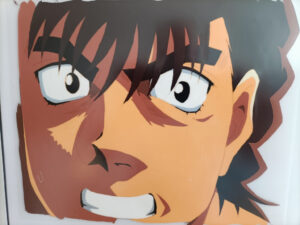
Ippo Makunouchi Studio: Madhouse / Nippon TV / VAP Production: Hajime no Ippo Year: 2000 Medium: Gouache on acetate Type: Animation cel Description: A shy high school student who becomes a professional boxer to build confidence and find his place in the world.
Gamma Venom Studio: Marvel Production: Hulk and the Agents of S.M.A.S.H. – episode The Venom Inside Year: 2013 Medium: Color pencil on large animation paper Type: Production drawing Description: A fusion of the Venom symbiote and gamma energy, resulting in a monstrous version of Venom after consuming Spider-Man.
Dr. Robotnik Studio: DIC Animation City Production: Adventures of Sonic the Hedgehog Year: 1993 Medium: Gouache on acetate with drawing Type: Animation cel Description: An egotistical mad scientist constantly devising schemes to conquer Mobius, only to be thwarted by Sonic.
Mr. Burns Studio: Film Roman / Gracie Films Production: The Simpsons Year: circa 1990s Medium: Pencil on paper Type: Production drawing Description: Charles Montgomery Burns, the greedy and malevolent owner of Springfield’s nuclear power plant, embodying corporate avarice.
Muhammad Avdol Studio: Studio A.P.P.P. Production: JoJo’s Bizarre Adventure Year: 1993 Medium: Gouache on acetate Type: Animation cel Description: An Egyptian An Egyptian mystic who fights using Magician’s Red, a supernatural entity that can control and attack with fire.
Beetlejuice Studio: The Geffen Film Company / Nelvana Production: Beetlejuice: The Animated Series Year: 1989 Medium: Gouache on acetate Type: Animation cel Description: A mischievous and energetic ghost known for his wild antics and shape-shifting abilities.
The Hulk Studio: Marvel Animation Production: Hulk and the Agents of S.M.A.S.H. Year: 2013 Medium: Color pencil on yellow animation paper Type: Production drawing Description: Bruce Banner transforms into the Hulk, a powerful green giant driven by rage, often struggling with his own destructive tendencies.
Yosemite Sam Studio: Warner Bros. / Chuck Jones Productions Production: A Connecticut Rabbit in King Arthur’s Court Year: 1978 Medium: Pencil with timing notes Type: Layout drawing Description: A hot-tempered cowboy known for his fiery outbursts and relentless pursuit of Bugs Bunny.
Ivan the Terrible Studio: Bagdasarian Productions / Ruby-Spears Production: Alvin and the Chipmunks Year: 1983 Medium: Pencil on paper Type: Model sheet Description: A caricature of the Russian tsar, depicted as a formidable wrestler in an episode of the Chipmunks.
Red Skull Studio: Marvel Animation Production: Hulk and the Agents of S.M.A.S.H. Year: 2013 Medium: Pencil on paper Type: Production drawing Description: Johann Schmidt, a former Nazi agent and leader of HYDRA, notorious for his red skull-like visage and malevolent ambitions.
MASTERSTROKE: THE ART OF ANIMATED EMOTIONS
Animation possesses a unique ability to convey profound emotions. In animation, emotion is a key storytelling device, particularly in Japanese animated cartoons, known as anime. Anime is renowned for pushing the boundaries of emotional expression through highly stylized and exaggerated visual techniques. Emotions like anger, joy, sadness, and surprise are drawn to perfection. Anime also uses “super-deformation” or “chibi” style, where characters are drawn with exaggerated, childlike proportions—oversized heads, impressive hairstyles, huge eyes, and minimal noses—to convey strong emotions like embarrassment, frustration, or joy.
Animation Nation is the only gallery in the Netherlands to exclusively show concepts, drawings and ‘cels’ from animated cartoons. These are original works of art, hand-drawn by artists from famous animation studios and used during the production process of creating animated cartoons from the 1930s to the 2000s.
MASTERSTROKE: THE ART OF ANIMATED EMOTIONS
Animation possesses a unique ability to convey profound emotions. The mastery required to express feelings through just a few pencil lines is undeniable, paralleling the skills of historical fine artists. Notably, artists such as Salvador Dalí and Pablo Picasso deeply appreciated the art of animation. The exhibition delves into the concept of “the line” as described by legendary animator Chuck Jones (Bugs Bunny, Daffy Duck, Roadrunner). Jones asserted that true mastery in drawing lies in the ability to capture complex ideas and emotions with just a few strokes—blending technical artistry with emotional depth. For Jones, true masters of “the line” could draw what they envisioned without hesitation and without error. In animation, emotion is a key storytelling device, particularly in Japanese animated cartoons, known as anime. Anime is renowned for pushing the boundaries of emotional expression through highly stylized and exaggerated visual techniques. Emotions like anger, joy, sadness, and surprise are drawn to perfection. Anime also uses “super-deformation” or “chibi” style, where characters are drawn with exaggerated, childlike proportions—oversized heads, impressive hairstyles, huge eyes, and minimal noses—to convey strong emotions like embarrassment, frustration, or joy.
OBJECTS:
- Mashin Hero Wataru: A 9-year-old boy named Wataru Ikusabe is magically transported to the magical realm of Soukaizan, which he is destined to save from an evil, demonic ruler. The main character is depicted in an extreme close-up. Produced by Sunrise Studio for Nippon TV, Japan, directed by Shuji Iuchi. Gouache on acetate, 1988.
- The Simpsons: Medium shot of Grandpa asking, “Who are you?” from the episode “Million Dollar Abie.” Produced by Film Roman/Fox/Matt Groening. Pencil on paper, 2006.
- Hajime no Ippo (also known as Fighting Spirit): Based on the manga by George Morikawa, this series follows high school student and boxer Ippo Makunouchi. The artwork shows an extreme close-up of Ippo. Produced by Madhouse for Nippon TV, Japan. Gouache on acetate, 2000-2003.
- The Hulk from The Hulk and the Agents of S.M.A.S.H.: Produced by Dongwoo Animation/Marvel. Colored pencil on animation paper, 2013-2015.
- Adventures of Sonic the Hedgehog: Featuring the character MacHopper the kangaroo from episode 131 (shot at 7’29”), designed by Milton Knight and voiced by Scott McNeil. Produced by DIC and Sega. Gouache on acetate and colored pencil on animation paper, 1993.
- Hajime no Ippo (はじめの一歩, lit. “The First Step”) also known as Fighting Spirit: Based on the manga by George Morikawa, featuring an excited Ippo Makunouchi. Produced by Madhouse for Nippon TV, Japan. Gouache on acetate, 2000-2003.
- Quack Pack: Drawing of Donald Duck, signed by animator Romy Garcia, whose name is also written on the back with a marker. Produced by Disney. Pencil on animation paper with markings, 1996.
- Dragon Knight Gaiden: Based on the game, featuring cel A5 of a character hanging upside down. This is a hentai anime directed by Jun Fukuda (Studio Taki Corp.) for Studio Wombat. Gouache on acetate, 1991.
- JoJo’s Bizarre Adventure: Based on the manga by Hirohiko Araki, featuring the main character Jean-Pierre Polnareff from episode 3 (episode 10 in U.S. versions). Directed by Hiroyuki Kitakubo, produced by Studio A.P.P.P. Colored pencil on animation paper, 1993.
- Rupert Bear and his father, Mr. Bear: Rupert is an animated television series based on the character Rupert Bear by Mary Tourtel. The series aired from 1991 to 1997. Produced by Nelvana Limited/Ellipse Programme. Gouache on acetate on a hand-painted non-matching background from the same series, 1991-1997.
- The Simpsons: Small shot of Grandpa looking sad and lost, from the episode “Million Dollar Abie.” Produced by Film Roman/Fox/Matt Groening. Pencil on paper, 2006.
- “Raid Kills Bugs Dead” Commercial: Three cockroaches in trouble, from a commercial originally designed by Tex Avery. Bugs designed by Don Pegler. RAID!, from the 1980s.
- Marmaduke: Character model sheets of the dog Alfie in different poses from the episode “Doggone Funny.” Produced by Ruby-Spears Enterprises. Gouache on acetate, 1981.
- I’m Gonna Be An Angel! (Tenshi ni Narumon!): Main character Noelle hangs around the neck of a friend while others appear concerned. Complete with dougas, produced by Pierrot. Gouache on acetate and colored pencil on animation paper, 1999.
- Kero Kero Keroppi: A popular Japanese character from the 1990s, based on a game. “Kero kero” is the sound a frog makes. Keroppi and a friend eat ice cream. Directed by Kanji Akahori, produced by Sanrio. Gouache on acetate and pencil on paper, 1994.

GALLERY ANIMATIONNATION HAS REOPENED WITH A NEW EXHIBITION CALLED “GUESS THE ANIMAL”
Almost twenty original animation art works used in the production of classic cartoon are on display, from Mickey Mouse to Ren & Stimpy.
GUESS THE ANIMAL
EXHIBITION ANIMATION NATION, SCHIEDAM, SUMMER 2024
The Tom and Jerry Show: Pencil sketch on paper by Len Simon (unsigned) of Spike and Jerry, pencil on paper, 2014.
Rocko’s Modern Life: The surreal life of an anthropomorphic Australian-immigrant wallaby named Rocko and his friends. Great cel with Rocko and Bighead, gouache on acetate, 1993.
Watership Down: Hazel, also known as Hazel-rah by the Watership Down rabbits, is a brave and intelligent buck, the main protagonist. Watership Down is an adventure novel by English author Richard Adams, published by Rex Collings Ltd of London in 1972. Set in Hampshire in southern England, the story features a small group of rabbits. Gouache on acetate, 1978.
Mickey Mouse steps up: Small drawing marked no. 158 in the sequence (probably pencil tests for MM sequence as Sorcerer’s Apprentice) signed by famed animator David Block, from World of Color, a night-time show at Disney California Adventure, part of the Disneyland Resort in Anaheim, California. Pencil on animation paper, 2010.
Catdog: American animated television series created for Nickelodeon by Peter Hannan. Great cel of a Cat and Dog joined at the hip while on holiday, gouache on acetate, 1998.
Spongebob Squarepants: Storyboard with four small drawings of an animated sequence, pencil on pre-printed storyboard paper, 2000s.
My Little Pony: Teddy (with the mohawk) and Sweetheart (with long hair) are not happy in this scene. Gouache on acetate, 1984-87.
Dink the Little Dinosaur: Rare key master set-up, featuring Tyrannor and Ariel the Parasaurolophus, also known as White Beauty, who saves one of Dink’s friends, on an original hand-painted background by Dennis Durrell or Don Moore, based on a design by Dennis Greco. The cel is from episode 2 (really no. 4, as there were 2 stories per episode). Gouache on acetate, gouache on animation carton, 1989.
Ren & Stimpy: Hermit Ren, episode 314, close-up of Ren in an upset state, directed by Chris Reccardi, gouache on acetate, 1994.
Fraidy Cat: From Unlucky Fraidy, a never produced episode 16. The drawings are dated September 9, 1975, very rare. Part of ABC’s Uncle Croc’s Block, made by Filmation, done by famous UK (later USA) animator Bill Pratt (1926-2001), signed on folder assisted by Frank Carr. Gina Groceer did the ink and paint and the director was Don Towsley (signed Don, came from Disney 1912-1986, worked on Fantasia, Pinocchio). Alan Oppenheimer did Fraidy’s voice. Fraidy Cat is an unlucky, stuttering, miserable cat who, like all cats, has nine lives but has used up eight of them and is on his ninth and last life, where he wants to make it last the longest. Gouache on acetate, pencil on animation paper, 1974/75.
Cow and Chicken: From episode 6, Boneless Kite with Red as Baron von Nein Lederhosen with chicken on a kite string, gouache on acetate, 1998.
Marsupilami: From the opening title animation of Raw Toonage, a combi series with different characters, signed by lead animator David Block (Gummi Bears, Ducktales, Big Hero 6), pencil on animation paper, 1993.
Easter Fever: Canadian adult series, we see main character Jack Rabbit being tempted by a go-go dancer, gouache on acetate, 1980.
Rupert Bear: Created by English artist Mary Tourtel and first appeared in the Daily Express on November 8, 1920. Animation series was made in the 90s, gouache on acetate, 1991.
Dog City: Also known as Jim Henson’s Dog City, hand-drawn model sheet of Bouvier with crossed eyes, scene 257 from episode 5, The Dog Pound, at around 16’00” crook Bouvier DaFlaundra is hit by a tennis ball, voiced by Dan Hennessey. Pencil on pre-printed model sheet paper, 1992.
Spongebob Squarepants: Squidward Tentacles, cashier at the Krusty Krab, in bed, gouache on acetate, 1999/2000.
Lucky Luke: His horse Jolly Jumper in side close-up, on purple copy background, gouache on acetate, 1983.
The commercial “Raid kills bugs dead” was very famous and started in 1963, first under the direction of animation legend Tex Avery. For more than 40 years, Don Pegler designed and drew the little monsters, in this case, cockroaches. Gouache on acetate, 1980s.
SPACESHIPS, ROBOTS, ALIENS
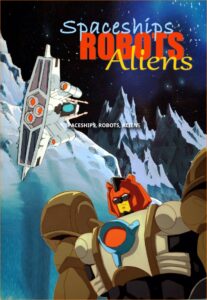
In this exhibition we explore the many animated cartoons that travel beyond our blue marble into the vast expanse of space. We go from Star Trek and Star Wars to TinTin’s trip to the Moon. We meet Transformers, Japanese robot cats, cat-eating Alf and even the Minions. ‘How to serve humans’ may be a cook book…

MONSTERS of animation
In this monstrous exhibition, we put the spotlight on the creepiest and funniest creatures in animation history. They were forced to stand in the shadow of goody-goody heroes, sugar-sweet princesses, and cute animals for too long. Gallery AnimationNation safely leads us through the darkest forest and the spookiest castle crawling with vampires, mummies, centaurs, zombies, werewolves, creepy furballs and horrifying apparitions: a blood-curdlingly hilarious adventure through the history of 20th century animation.
UNCLE WALT’S TREASURY

WE CAN BE HEROES
In these trying times we all need to be heroes. Luckily, since the 1930s animators have given us plenty of inspiration and role models. Our animated superhumans are always in the mood to save the world and humanity. The archetype of all superheroes may be Superman, but AnimationNation believes 1933 Popeye should be credited too. From your friendly neighborhood Spiderman to muscleman Conan, from the first African American superheroes Superstretch and Microwoman to Robocop, we all need a little protection sometimes. An exhibition of over 50 original cels, drawings and sketches.
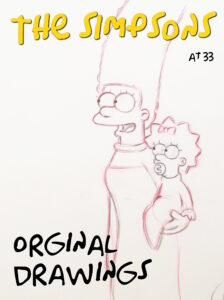
THE SIMPSONS AT 33 – DRAWINGS
The longest-running primetime television series (from the conservative channel Fox) once started as a short, funny cartoon on The Tracey Ullman Show in 1987. It grew into a worldwide phenomenon. The animated series is both accessible entertainment as well as an intelligent, ironic version of American society. The Simpsons turn 33 this year and we celebrate with an exhibition of over 50 original drawings, designs and sketches.

ANIMATION STARS FROM THE 80S
Aaah, the 1980s! Those of us who remember them, desperately try to forget them. Those of us who never lived through them, feel they missed out on a party that lasted a decade. It was a time when the strangest music met the weirdest performers wearing clothes beyond your wildest imagination. Let’s not even think about discussing hairstyles and make-up. Children and adults growing up in the 1980s were also treated to a wide selection of animated cartoons, mainly on television. Budgets were low but talent was abundant. Which other decade could have given us the Masters of the Universe, ALF and Inspector Gadget, to name but a few. Now we can go back to the 80s in Gallery Animations Nation.

AMAZING ANIME
Art Exhibition
In this special exhibition we want to show you the art that lies at the heart of the complicated work-flow process of any Japanese animated cartoon. Japanese animation covers a broad scope of artistic styles and a wide variety of (often adult) themes. In general terms, however, we can detect some similarities. In Japanese animation noses tend to be small and eyes and mouths large. Camera angles are more creative and backgrounds tend to be minimalistic. All these images rush us by when we are watching an animated cartoon in TV but seen up close, as a frozen moment in time, the art behind the anime can show its true, amazing colours and extraordinary quality. All of a sudden, even a poorly scripted and mass-produced animation film shows surprising precision, subtlety, skill, and artistic merit. The drawings, sketches and cels in this exhibition have not necessarily been selected because the animated cartoons are famous or critically acclaimed, they have been chosen to show the hidden gems of even ordinary, run-of-the-mill animation.
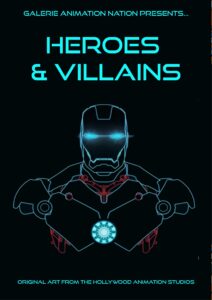
HEROES AND VILLAINS
Nowadays, everything is possible in live action films. If you can imagine it, you can create it. Even on TV, the special effects have become spectacular. However, there was a time when live-action heroes looked very fake and unrealistic. Only one medium could stand up to the challenge of creating the impossible: animation. Here the (super)villains could fight the (super)heroes, here they could fly through the sky and explore the universe. Here they could throw around cars and blow up buildings. Here they could change shape and fight any monster. Time to look at the heroes and villains of animation: from the sort-of-realistic Superman and Iron Man to the bizarre world of Pegleg Pete, Wile E. Coyote and Yosemite Sam

CAUGHT IN ANIMATION
Not all cartoons start their life in animation. Some were first a comic book, a novel or even a game. And Some comic books were inspired by cartoons. This mutual influence is the subject of this special exhibition with originals from the world of comics and animation. The animated Panther became a comic book character and comic book character Lucky Luke became animation. Garfield moved from the newspaper to the silver screen and the Simpsons moved from TV to the bookshelf. The Phantom of the Opera originated in a book, then moved to film, to the theatre and then to animation. The Lord of the Rings was an animated feature film long before Peter Jackson got his hands on it. Discover who what when motivated characters to change the genre.

PRETTY IN PINK The Art of the Pink Panther
More than 50 years, film director Blake Edwards asked the cartoon studio DePatie/Freleng to make a funny cartoon for the start of his ‘Pink Panther’ feature with Peter Sellers in the lead. The Pink Panther was the name of a diamond in the film, but DePatie/Freleng studios created a stylish Pink Panther. A star was born, right from the first Oscar-winning Pink Panther cartoon (1963). The panther would act in hundreds of cartoons and specials. This exhibition shows original ‘cels’ (handmade watercolor paintings on plastic used in the making of the cartoons), original cartoon sketches and comic book drawings.
OLDER EXHIBITIONS